$185.00
$215.00
On-Site Registration Cost
3 Hours
Sponsors
Sponsors
Course Description
Presented by: Cabinet Maker Association (CMA)
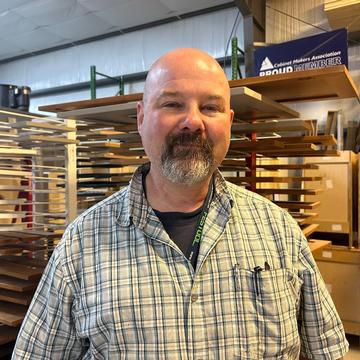
Forget theory—this is Lean the way it actually works in a small to mid-sized woodworking shop. Led by CMA board member and veteran shop owner Gregory Paolini, this hands-on bootcamp breaks down the tools, habits, and mindset shifts that drive real efficiency on the shop floor. Paolini shares his proven methods for reducing waste, building a strong Lean culture, and engaging every team member in continuous improvement. From 5S organization to Kaizen events, Andon systems, Kanban boards, and the Theory of Constraints, you’ll see how Lean thinking transforms chaos into flow—and how discipline and culture sustain it.
Part 1: Lean Foundations — Mindset, Culture, and the Seven Wastes
Learn what Lean really means (and what it doesn’t). Paolini demystifies Lean by connecting its principles to real woodworking operations. Participants will explore the “TIM WOOD” model of waste, understand why culture trumps tools, and see how a change in mindset—from profit focus to customer value—creates lasting results.
Learning Objectives:
• Define Lean as a customer-focused, waste-reduction philosophy rather than a cost-cutting exercise.
• Identify the 7–8 types of waste (Transportation, Inventory, Motion, Waiting, Overproduction, Overprocessing, Defects, and underutilized talent).
• Understand why Lean must start with leadership commitment and cultural buy-in across all levels of the organization.
Part 2: Lean in Action — 5S, Kamishibai, and Morning Meetings
Move from theory to action. This session focuses on practical tools to structure your shop for success—starting with 5S (Sort, Set in Order, Shine, Standardize, Sustain). Learn how to assign accountability using Kamishibai boards, organize visual SOPs, and run effective morning meetings that unite the team around priorities and improvements.
Learning Objectives:
• Implement 5S practices that eliminate waste, boost safety, and improve morale.
• Use Kamishibai boards and visual SOPs to establish accountability and standards.
• Conduct daily “Gemba” walk-style meetings that engage the entire team in communication and continuous improvement.
Part 3: Advanced Lean — Kaizen, Andon, Kanban, and the Theory of Constraints
Once the fundamentals are in place, it’s time to tackle bottlenecks and flow. This module dives into advanced Lean tools like Andon systems for signaling problems, Kanban for managing inventory, and the Theory of Constraints for identifying the true limiters of throughput. Participants will also learn the 5 Whys problem-solving method and how to prioritize improvements for maximum impact.
Learning Objectives:
• Apply Kaizen (continuous improvement) to solve recurring problems and increase throughput.
• Implement Andon and Kanban systems that empower teams to respond quickly to workflow issues and inventory needs.
• Use the Theory of Constraints and 5 Whys to identify root causes and optimize production flow.
Key Takeaway: Discipline Is the Secret Sauce
Lean isn’t an event—it’s a way of life. Paolini emphasizes that discipline and persistence are the keys to sustaining improvements. Attendees will leave inspired, equipped with practical resources, and motivated to build a Lean culture that sticks.
Learning Objectives:
• Recognize that sustained Lean success depends on consistency, leadership, and engagement.
• Learn strategies to prevent “Lean fatigue” and maintain momentum long-term.
• Commit to continuous improvement through small, steady wins (“2-second Lean” approach).
Speakers
Speakers
Use our advanced search to get immediate answers related to the 2026 show, participating exhibitors, featured products, workshops and news.