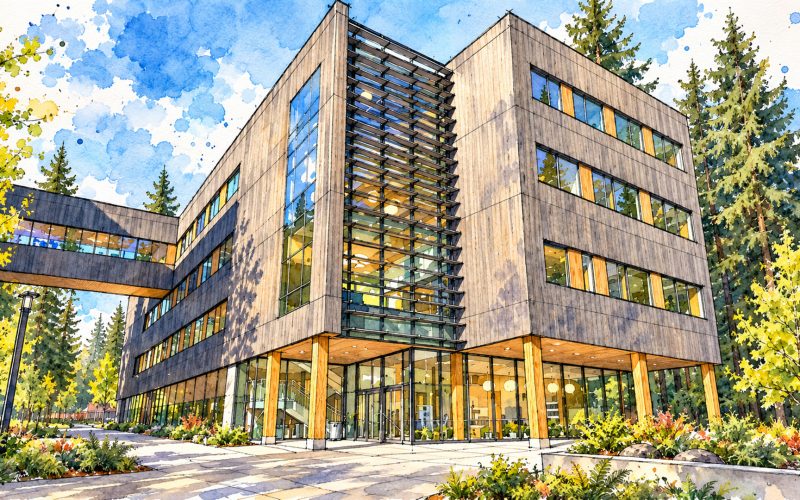
The newly opened National Museum of Forest Service History in Missoula, MT uses timber to create its learning environment.
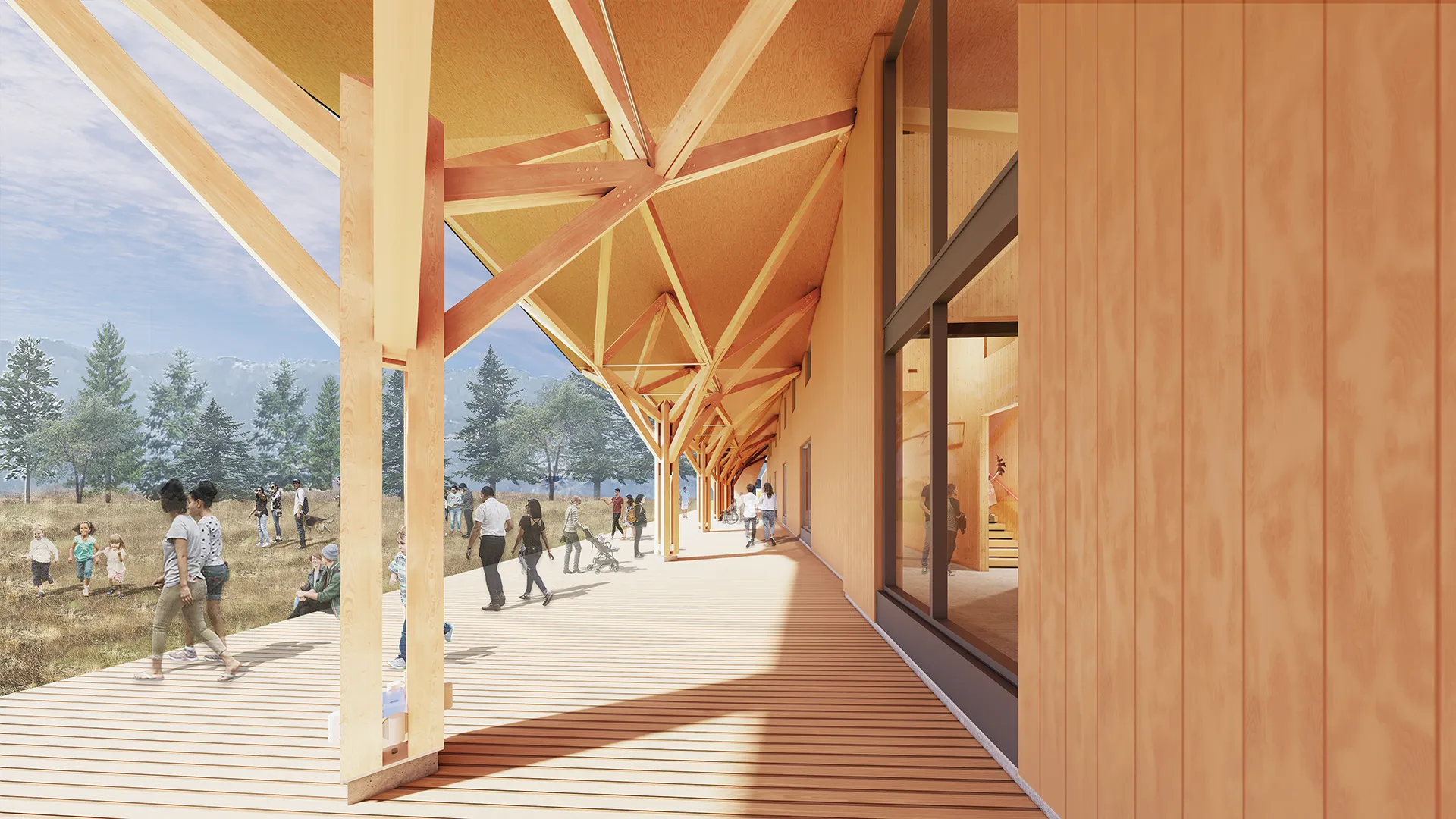
Opening this summer and designed by Leers Weinzapfel Associates, the new museum uses the walls, ceilings and other details to tell its educational story of the United States Forest Service. The 20,000-square-foot structure uses sculptural heavy timber columns, designed as abstracted tree forms and supported by concealed steel joints, according to a new review by Metropolis, the design and architectural magazine and website.
“The clients were personally vested; this is their passion project,” Tom Chung, principal at Leers Weinzapfel, told Metropolis. Much of the wood material used was procured via donation or discount from suppliers and fabricators, he said. The Western location—near what Chung calls “the hotbed of mass timber in the U.S.”—also enabled easy collaboration and coordination with suppliers and fabricators.
“It was important that it serves as an encyclopedia of wood products and technologies,” Chung said. Some 13 species (for the treelike columns) of trees are being used, including: sugar maple from the Northeast, bald cypress from the South, Alaskan yellow cedar, Douglas fir from the Pacific Northwest and American chestnut from the Midwest. The main body of the building is constructed of cross-laminated timber (CLT), with mass plywood panel flooring, laminated veneer lumber used for the structural walls in the black box digital gallery and western red cedar siding on the exterior, Metropolis reported.
The timber columns give “the effect that you’re in a forest,” he said and were inspired in part by the columns of Gothic design. “It is kind of a cathedral.”