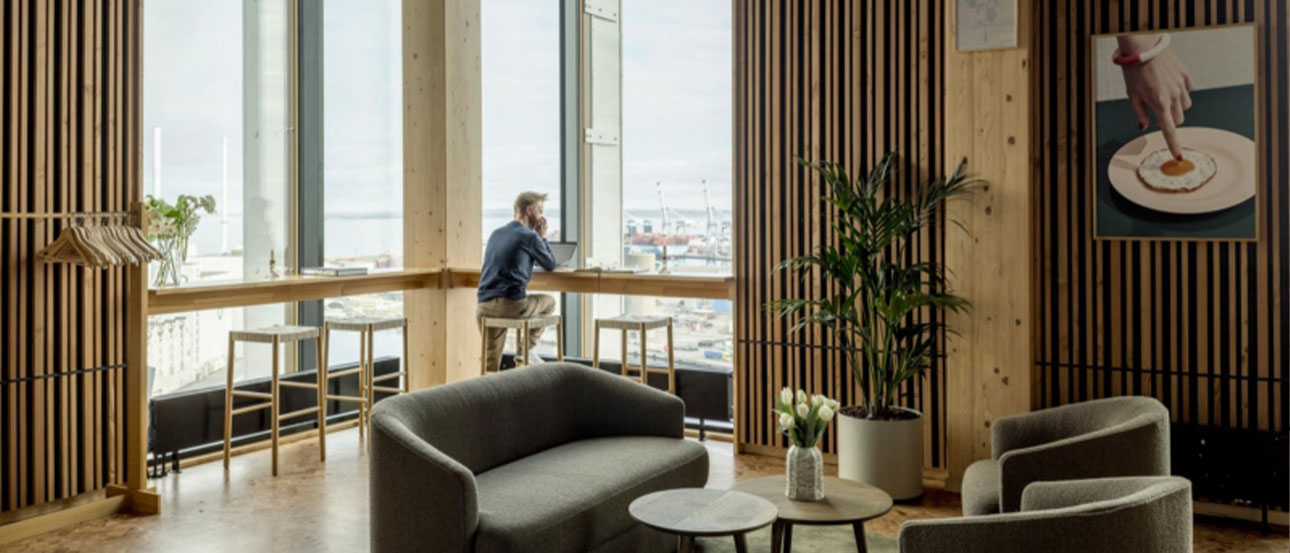
At 20 stories, the new development also uses a number of other low-carbon high-rise construction techniques.
Metropolis magazine, the online and print design and architecture magazine, in reporting on the new mass timber structure, also asks what it calls “one of architecture’s hardest questions: can the high-rise, arguably the most carbon-intensive urban typology, be rethought as a circular, low-emissions system?”
At a 260-foot structure and the centerpiece of a 3.62-acre urban development in Aarhus, Denmark’s second-largest city, the project uses waste such as used turbine blades as well as timber as “a prototype for how dense urban construction might reduce its dependence on carbon-intensive materials.
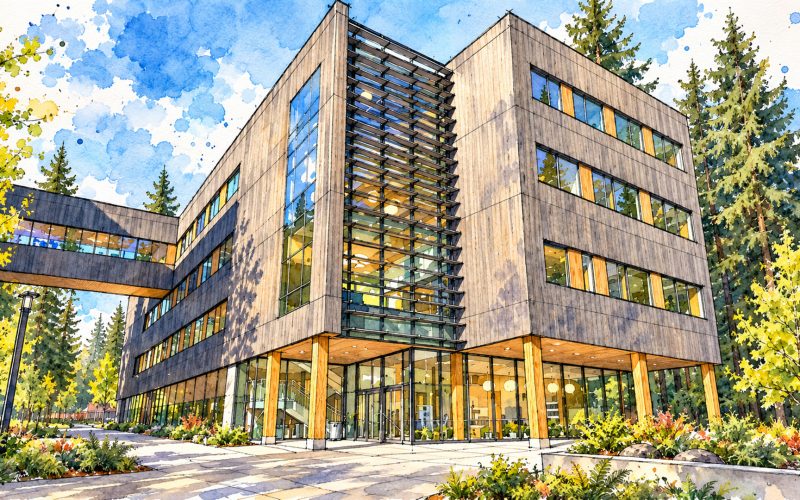
The name of the development in Danish is “træ,” which means tree, timber and three—and according to the developers, captures its “biogenic material, ecological ambition and trio of interconnected volumes.” The rounded towers are structured with cross-laminated timber (CLT) slabs and glulam columns anchored by concrete cores. The hybrid system balances timber ambition with structural and regulatory demands.
The developers said measured against a conventional concrete benchmark, the project achieved a 26 percent reduction in CO₂ emissions, with 21 percent attributed to timber-led design and 5 percent to the integration of reused materials.
Image: Rasmus Hjortshoj, courtesy: TRÆ, Lendager